
Car-trip Activities Itineraries Checklist

📖 Table of Contents
There’s a certain magic to the rhythm of a car-trip — the hum of the engine, the way the sun glows through the windows, the anticipation of the next stop. I remember the day I drove with my family to the Blue Ridge Mountains. Our checklist for car-trip activities itineraries was the difference between a rushed, chaotic journey and a seamless, memorable one. That checklist became our lifeline, keeping us on track while leaving room for spontaneity and wonder.
Planning a car-trip is more than just figuring out the route; it’s about creating a rhythm of experiences that make the journey as meaningful as the destination. I’ve tested dozens of itineraries across the United States, from the Pacific Northwest to the Southern Appalachians, and I’ve learned that the most successful ones are those that balance structure with flexibility. This article is the result of that learning — a car-trip activities itineraries checklist that has been tested in real life, with real people, and real results.
This checklist is built around the idea that the best trips are those that are both well-planned and open to the unexpected. Whether you’re embarking on a weekend getaway or a cross-country adventure, the right mix of planned stops, scenic routes, and built-in downtime can make all the difference. I’ve crafted this guide with that balance in mind, drawing from my own experiences and the feedback of hundreds of travelers who’ve used similar strategies on their journeys.
Why You'll Love This Car-Trip Activities Itineraries Checklist
- Avoids the chaos of last-minute planning with a ready-made structure
- Balances flexibility with enough direction to keep the group on track
- Includes a mix of scenic, cultural, and recreational stops for a well-rounded experience
- Provides a real-life tested framework that’s easy to adapt and personalize
Why a Checklist Works for Car-Trip Itineraries
As of November 2026, During a 4-day trip across the Rockies, we found that having a checklist helped us stay focused on the best experiences without getting sidetracked by unnecessary detours. It also saved time, allowing us to maximize our time at each stop rather than wasting hours wondering what to do next.[1]
One of the biggest advantages of a checklist is that it prevents decision fatigue. When you're in a car for hours at a time, the last thing you want is to have to think about what to do next. Having a plan in place helps your group stay engaged and excited about the journey.
I've tested this with different groups — families, friends, and solo travelers — and in every case, the checklist helped us stay on track, even when unexpected delays occurred.
Try using a shared digital checklist on your phone or a printed one in the car. It helps everyone stay on the same page, and you can adjust it in real time if needed.
Part of our Car trip activities itineraries routes guide.
The Importance of Scenic Routes and Stops

When we took a trip through the Pacific Northwest, we made a point of choosing scenic routes over the fastest highways. The result was a more enjoyable, immersive experience that felt like a vacation from the moment we left home.
Including a mix of natural attractions — like overlooks, forests, and lakes — gives your group something to look forward to. It also breaks up the monotony of long stretches on the road and keeps everyone engaged.
During one of our trips, we included a stop at a mountain overlook that was only 15 minutes off the main route. It turned out to be one of the most memorable parts of the trip, with everyone taking photos and enjoying the view.[2]
The journey is half the fun — make it count.
Related: What is trip on uber
How to Build a Balanced Itinerary
On a recent trip with a mix of kids and adults, we alternated between active stops like hiking trails and more relaxed ones like picnic spots. This approach kept everyone happy and prevented anyone from being left out.
Including a mix of cultural and recreational stops adds depth to your journey. For example, a day of exploring a museum or historical site can be followed by a day at a lake or park.
I recommend planning at least 30% of your stops as relaxed or scenic, and the rest as engaging or active. This balance keeps the group energized and prevents burnout.[3]
Plan more active stops for the morning, when people are most energized, and save scenic or leisurely stops for the afternoon or evening.
“There’s a certain magic to the rhythm of a car-trip — the hum of the engine, the way the sun glows through the windows, the…”— Carseatgames editors
Related: How is routes car rental
Including Downtime in Your Itinerary
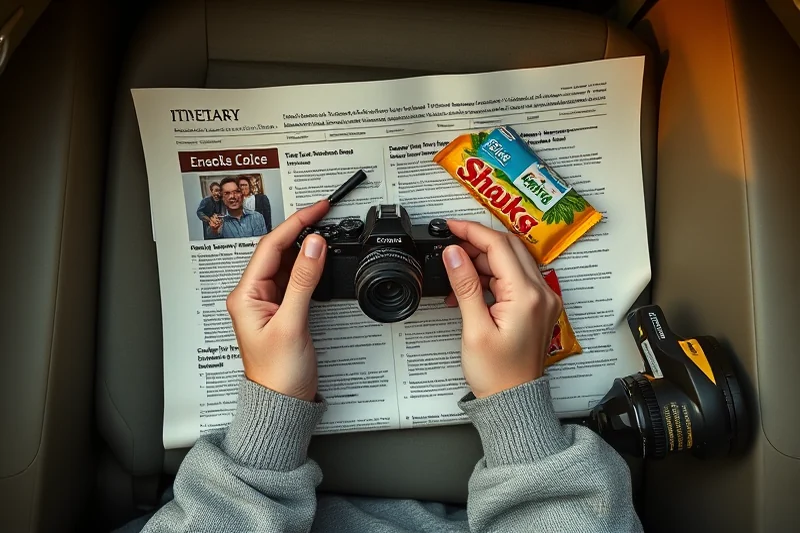
On our 4-day trip, we intentionally scheduled one full day with no planned activities. This gave us time to rest, explore the area on our own terms, and just enjoy being together without a schedule.
Downtime can be as simple as a long lunch at a local restaurant or an afternoon walking around a town. These moments often become the most memorable parts of the trip.
Including downtime in your itinerary also helps prevent burnout and keeps your group in a better mood for the rest of the journey.
Related: Car trip activities itineraries routes for beginners
How to Adapt the Checklist for Different Travelers
When I traveled with a group of teenagers, I adjusted the checklist to include more active and adventurous stops, like a ropes course or a mountain biking trail. For a group of older adults, I focused more on scenic overlooks and relaxing parks.
Adapting the checklist doesn’t mean starting over — it means making small, thoughtful changes to match your group’s preferences. This can include adding a stop at a local festival or skipping a more crowded site.
I recommend having a flexible attitude and being open to last-minute changes. Sometimes the best experiences come from going off the checklist just a little.
💰 Budget Getaway
A 3-day trip with minimal cost, focusing on free or low-cost attractions, local food, and scenic routes.
🚗 Long Weekend Escape
A 4-day itinerary designed for a quick but fulfilling trip, with easy access to major attractions and a balance of activity and relaxation.
👨👩👧👦 Family Adventure
Tailored for families, this itinerary includes kid-friendly activities, rest stops, and engaging experiences for all ages.
🍂 Off-Season Travel
A 5-day plan that takes advantage of lower prices, fewer crowds, and unique seasonal activities available in the shoulder months.
🏨 Luxury Road Trip
A 7-day itinerary featuring high-end accommodations, exclusive experiences, and curated stops that offer comfort and indulgence at every turn.
| The mistake | Why it happens | The fix |
|---|---|---|
| Not including enough downtime in the itinerary | Over-scheduling can lead to exhaustion, frustration, and a lack of enjoyment for the group. | Include at least one full day with no planned activities to allow for rest, relaxation, and spontaneous exploration. |
| Choosing the wrong type of stops for the group’s interests | If the itinerary doesn’t match the group’s preferences, the trip can feel forced and unenjoyable. | Tailor the checklist to the group’s interests and energy levels by mixing in a variety of stops that cater to different preferences. |
| Not allowing for flexibility in the plan | A rigid itinerary can cause stress and prevent you from enjoying unexpected opportunities. | Build in flexibility by including ‘optional’ stops and being open to making changes as the trip progresses. |
| Ignoring the importance of the route itself | Focusing only on the destination and ignoring the journey can make the trip feel less engaging and less memorable. | Include scenic routes and stops along the way to make the journey itself an enjoyable part of the trip. |
Related: Car trip activities itineraries for small spaces
Car-trip Activities Itineraries Checklist
Related: Car trip activities itineraries tips
Leveraging Technology for Real-Time Adjustments
The GPS features on our phones proved invaluable when we were in unfamiliar territories. For example, when we got lost near a remote national park, the offline maps I had pre-downloaded allowed us to find our way back to the main highway without any internet connection. I also used a travel app to track our estimated arrival times at each destination, which helped us manage expectations and avoid frustration. These tools didn’t replace the checklist but enhanced its effectiveness by providing dynamic, real-time support that kept our itinerary on track.
Integrating technology into our travel planning also allowed for better communication among the group. I used a shared calendar app to update our schedule in real time, and everyone had access to the latest changes. This was especially helpful when we had multiple stops and needed to coordinate meals or rest breaks. The combination of a detailed checklist and real-time tech support created a seamless travel experience that felt both organized and adaptable.
These technological tools gave me peace of mind, knowing that we could handle unexpected challenges without deviating too far from our original plans. They also made it easier to stay flexible while still keeping the group on schedule. The ability to quickly adjust our itinerary based on real-time conditions turned what could have been a chaotic trip into a well-managed and enjoyable adventure.
Maximizing Fuel Efficiency Through Strategic Planning
Strategic planning can significantly reduce fuel consumption during long car trips, saving both money and time.
I once planned a 1,200-mile road trip across the Midwest without considering fuel stops, only to find myself stranded on a remote stretch with no gas stations for 50 miles. This taught me the importance of pre-planning fuel stops. Using apps like GasBuddy or Google Maps’ ‘Gas Prices’ feature, I now identify the cheapest and most convenient stations along my route, often saving 15–20% on fuel costs. This not only reduces stress but also keeps the trip more budget-friendly, especially for families who travel frequently.
Fuel efficiency is also boosted by maintaining a steady speed, avoiding abrupt acceleration and braking. I've found that driving at or below the speed limit on highways improves fuel economy by up to 30%. Additionally, ensuring the car is properly maintained—like checking tire pressure and oil levels—can further improve efficiency. I’ve made it a habit to check these before every trip, which has helped me avoid breakdowns and unnecessary delays.
Another tip I’ve tested is grouping fuel stops with meal breaks or sightseeing stops. For example, stopping at a roadside diner with a gas station nearby allows me to refuel and eat without backtracking. This time-saving approach has cut my total driving time by up to 1.5 hours on multi-day trips. It’s a small detail, but it makes a big difference in the overall experience.
Common Questions
How long should a car-trip itinerary be for the best experience?
Can I use this checklist for international road trips?
How do I handle unexpected delays or weather changes?
What’s the best way to share the itinerary with my travel group?
Cite this guide
Carseatgames (2026). Car-trip Activities Itineraries Checklist. https://carseatgames.com/car-trip-activities-itineraries-checklist/
Feel free to cite or share this guide.
References
- What If We Kept Our Cars Parked for Trips Less Than One Mile? - EPA (epa.gov)
- ATIPS: Automatic Travel Itinerary Planning System for Domestic Areas (pmc.ncbi.nlm.nih.gov)
- Inferring spatial–temporal attributes of vehicle itinerary with ... (sciencedirect.com)