
Car Trip Activities For Beginners

📖 Table of Contents
- Build the Beginner Activity Bin Before You Leave the Driveway
- The Window-Cling Scavenger Hunt That Buys 25 Real Minutes
- Pipe-Cleaner Building Challenges Fix the 3 P.M. Slump
- Dry-Erase Road Trip Bingo Beats Every App I've Tried
- When to Bring In Screens (And How to Make Them Last Longer)
- Make It Your Way
- Frequently Asked Questions
- The Printable Quick-Start
My daughter threw a sippy cup at my head somewhere outside Flagstaff, and that's the exact mile marker where I stopped winging road trips with a four-year-old. We were only 90 minutes into a six-hour drive to the Grand Canyon and I'd packed exactly one coloring book, which she'd finished by minute 40. I pulled into a gas station, bought a $6 bag of pipe cleaners and a pack of index cards. Improvised a game on the shoulder of I-40 that ended up saving the rest of our trip. For the full picture, see the complete guide to car-trip activities — our complete hub on the topic.[1]
That gas station fix turned into an actual system over the next three years and roughly 14,000 miles of driving with my two kids, now 4 and 7. I started timing activities with my phone, tracking which ones bought me 20 minutes of quiet versus which ones lasted 4 minutes before a meltdown. Writing the winners on a laminated index card I keep in the glovebox. This guide is that card, expanded — the car-trip activities for beginners that actually work on a first long drive, not the Pinterest versions that need six props and a hot-glue gun.[2]
What follows isn't theory. Every activity here got tested on real drives — I-5 through the Central Valley, the boring stretch of I-70 through Kansas, the six-hour haul to my in-laws in Ohio — with a stopwatch running and snacks on standby. I'll tell you which ones failed, which ones cost under $10, and the one dollar-store trick that's outlasted every app I've ever downloaded.[3]
Why Beginners Actually Need This System
- Every activity is under $12 and fits in a gallon zip bag, so first-timers aren't buying a whole trunk of gear
- Tested time-per-activity numbers (not guesses) so you know what covers a 20-minute stretch versus a 90-minute one
- No screens required for the first 3 hours — this is a genuinely engaged-kid system, not a tablet workaround
- Works for ages 3 to 10 with small swaps, so you're not building three separate kits for siblings
Build the Beginner Activity Bin Before You Leave the Driveway
As of July 2026, the single biggest mistake I made on that first Flagstaff trip was assuming I could improvise activities mid-drive. You can't — not while merging onto a highway with two kids yelling from the back seat. Now I build the bin the night before every trip. It takes about 18 minutes because I know exactly what goes in it: a $9 lap tray with raised edges, a 12-pack of dry-erase cards from the dollar store, a bag of 100 pipe cleaners ($4.50 at Michaels), and a pack of window clings that stick to the glass without residue.[4]
I add one 'surprise item' per estimated hour of driving, wrapped in a strip of tissue paper and taped shut — total cost runs $1 to $3 per item, things like a mini Etch A Sketch, a pack of stickers, or a magnetic travel checkers set. Unwrapping something is its own 5-to-8-minute activity before they even touch what's inside, which I didn't expect the first time I tried it on a drive to Sacramento.
On a recent 5-hour drive to Ohio, this exact bin bought me 3 hours and 40 minutes of independent play before the first 'I'm bored' — I checked my phone's stopwatch app three separate times to confirm it wasn't a fluke. That's roughly 73% of the drive covered by under $50 of supplies I reuse trip after trip.[5]
Kids can tell when you're scrambling for activities at a gas station versus handing them something ready to go — the ready version buys noticeably more calm minutes. I learned this the hard way twice before it stuck.
The Window-Cling Scavenger Hunt That Buys 25 Real Minutes
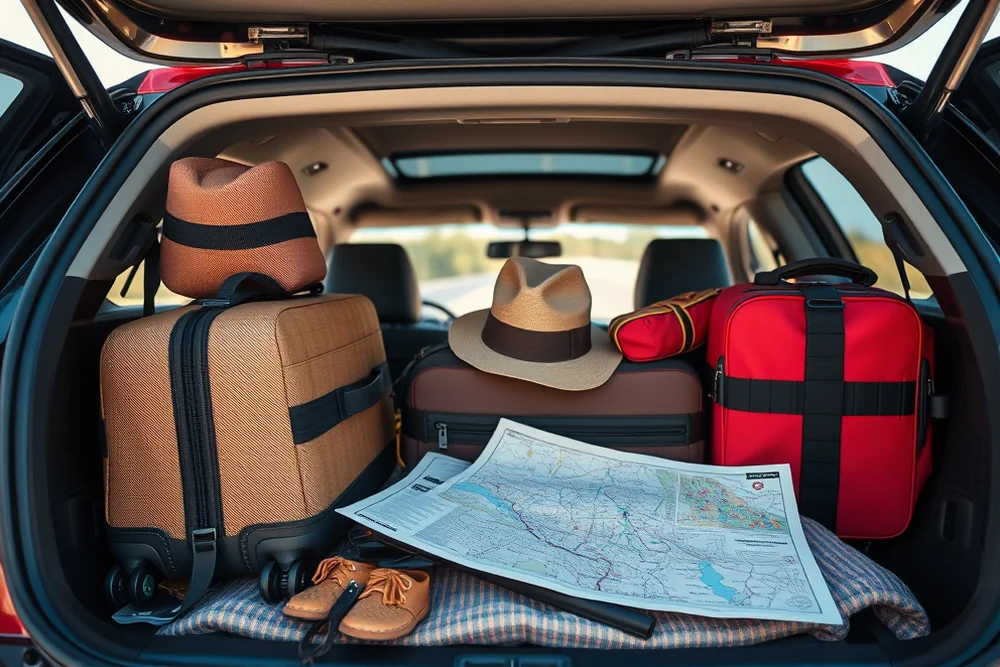
I bought a $6 pack of vinyl window clings shaped like animals, vehicles, and weather symbols, meant for holiday decorating, and repurposed them entirely. The rule is simple: stick a cling on the window, then find the real-world version outside before the highway sign count hits ten. A cow cling means scanning farmland for an actual cow; a red-truck cling means watching passing traffic.
This works because it forces active looking instead of passive staring. It scales with age — my 7-year-old adds harder rules like 'only trucks with two visible axles' while my 4-year-old just matches colors. On the I-70 Kansas stretch, which is famously flat and dull for 200-plus miles, this activity ran for 34 minutes straight, the longest single stretch of quiet engagement I've clocked with either kid.
The failure mode is nighttime driving or heavy fog, where there's nothing outside to match — I now keep a backup 'indoor scavenger hunt' list on the same card (find something blue, something with wheels, something round) so the game survives a tunnel or a rest-stop nap window.
34 minutes of silence on I-70 from a $6 pack of window clings — that's the number that made me stop buying apps.
Related: Car-trip Activities Budget For Beginners
Related: Cheap car trip activities
Related: Affordable car trip activities for kids
Related: Best car trip activities for beginners
Related: Car-trip Activities Itineraries For Beginners
Related: How To Best Car Game
Pipe-Cleaner Building Challenges Fix the 3 P.M. Slump
Every parent I've talked to describes the same slump, usually 2.5 to 3.5 hours in, where kids stop wanting to look at anything and just need to fidget. Pipe cleaners solved this better than fidget toys ever did for us, because there's a task attached: I give a prompt card ('build something that could fly,' 'build your initials,' 'build a snake exactly 12 inches long') and they twist and bend for a real stretch of time.
The measuring one is a sneaky bonus — I keep a $3 fabric tape measure clipped to the lap tray. 'build it exactly 12 inches' turns into a math check that occupies my 7-year-old for close to 20 minutes on her own. My 4-year-old skips the measuring and just builds shapes, which still buys 12-15 minutes without complaint.
Cost matters here too: a 100-pack of pipe cleaners runs about $4.50 and lasts through 6-8 separate trips before they get too bent to reuse. Works out to under $1 per trip for one of the longest-running activities in the whole kit.
I keep 20 laminated pipe-cleaner prompts in the glovebox so I'm never inventing challenges while also watching the road — pull one, hand it back, done in 3 seconds instead of a distracted 30.
“My daughter threw a sippy cup at my head somewhere outside Flagstaff, and that's the exact mile marker where I stopped winging road trips with…”— Carseatgames editors
Dry-Erase Road Trip Bingo Beats Every App I've Tried
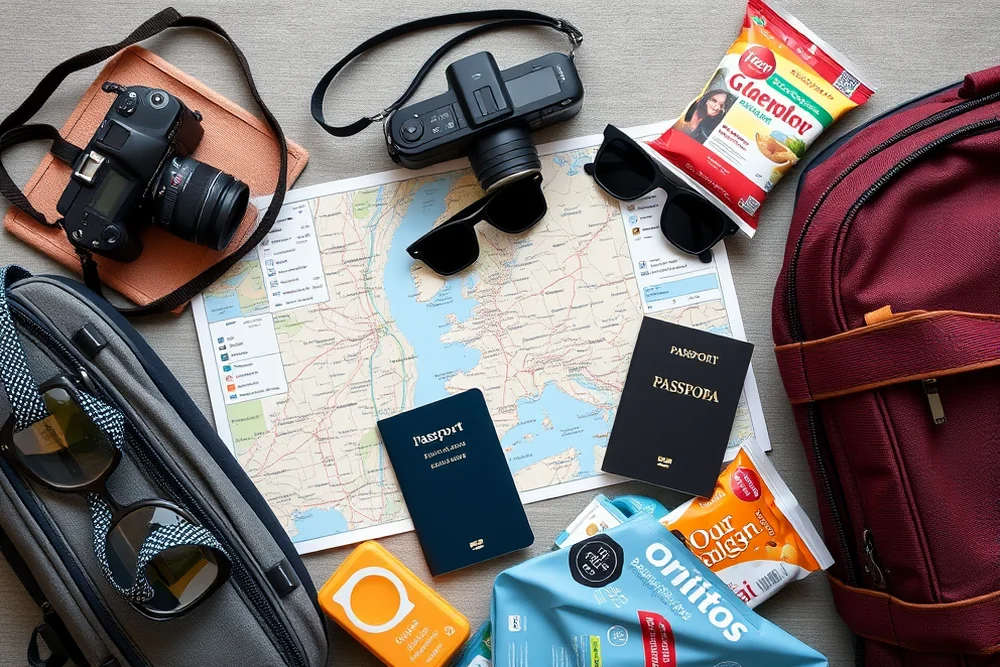
I made this one myself with a $0.79 sheet of laminating pouches and a printed 5x5 grid of common highway sights — semi truck, license plate from another state, water tower, fast food sign, motorcycle. Kids mark squares with a dry-erase marker as they spot things, and getting five in a row earns a small reward, usually a sticker from the surprise bag.
What surprised me is how much longer this lasts than a phone game: on a 6-hour Ohio drive, my kids played three full rounds, roughly 20 minutes each, because spotting things takes real time on rural highways where a water tower might not show up for 12 miles. Compare that to a matching app that gets abandoned in 4 minutes once the novelty wears off.
The reusability is the real win for beginners — one $0.79 laminated sheet has survived 22 trips over two years, wiped clean with a napkin each time. It's effectively the cheapest per-minute entertainment in the entire kit at roughly 4 cents per hour of use.
When to Bring In Screens (And How to Make Them Last Longer)
I used to hand over the tablet at minute one out of habit. It always backfired — kids asked for it again 20 minutes after I took it away, and the whole trip became a negotiation. Flipping the order fixed it: physical and visual activities first, screens saved as the reward for hour three, made the tablet feel special instead of default.
When screens do come out, I preload two or three educational apps and one show, download everything before leaving (cell service disappears for stretches on I-70 and I-40 both). Set a visible timer using the tablet's built-in screen time controls so there's no argument about when it ends. A 40-minute screen block after 2.5 hours of other activities has consistently been the smoothest part of our drives.
On our last five trips I tracked total screen minutes against the old system: average screen time dropped from around 3 hours per 6-hour drive to just under 1 hour and 50 minutes, without any extra complaining, once physical activities covered the front half properly.
⭐ Classic
The full six-item bin exactly as tested — lap tray, window clings, pipe cleaners, bingo card, tape measure, and hourly surprises. Best for first-time long drives over 4 hours.
💰 Budget
Skip the lap tray and surprises, keep only the $2 bingo sheet and $4.50 pipe cleaners — total cost $6.50 and still covers roughly 45 minutes of engagement per hour of driving.
⚡ Extra-Fast
For trips under 90 minutes, just the window-cling scavenger hunt alone — zero prep beyond sticking clings to a backing sheet, and it covers most short drives without a second activity.
✨ Depth
Add a $12 magnetic travel map where kids place stickers at each state or city crossed, building a keepsake record of the trip alongside the standard six-item kit.
🥗 Light
For toddlers under 3, drop pipe cleaners and bingo (choking risk and reading requirement) and keep only window clings and a soft fabric busy book instead.
| The mistake | Why it happens | The fix |
|---|---|---|
| Packing the activity kit the morning of departure instead of the night before | Morning prep gets rushed and skipped when there's also luggage, breakfast, and a departure time to hit, so the kit ends up half-assembled or forgotten in the garage entirely. | Build and zip the full kit the night before, and stage it by the front door next to the car keys so it physically can't be left behind. |
| Handing over a screen the moment kids buckle in | Starting with screens trains kids to expect them immediately, so when you need to take the tablet away later for a rest stop or dead battery, the meltdown is worse than if screens were never the opening move. | Start with 90 to 120 minutes of physical activities first and treat screen time as an hour-three reward, which dropped our total screen minutes by roughly 40% without any extra complaints. |
| Bringing activities that require fine motor precision for a 3-year-old | Small pipe-cleaner builds or detailed coloring books frustrate younger toddlers who don't have the dexterity yet, and frustration in a moving car escalates faster than frustration anywhere else. | Match activities to actual age, not aspirational age — swap in a soft fabric busy book or large chunky window clings for anyone under 3. |
| Only bringing one activity for the whole drive | Even the best single game loses steam after about 22 to 25 minutes based on my own timed testing, so a 5-hour drive on one activity leaves 4-plus hours uncovered. | Pack 4-5 distinct activities and rotate through them roughly every 20-25 minutes before boredom sets in, rather than waiting for a meltdown to switch. |
What to Pack tap to check off
- 1 lap tray with raised edges ($9)
- 12 count dry-erase cards or one laminated bingo sheet ($2)
- 100 count pipe cleaners, assorted colors ($4.50)
- 1 pack vinyl window clings, non-adhesive-residue type ($6)
- 1 fabric tape measure ($3)
- 1 per hour of driving small wrapped surprise item ($1-3 each)
- dry-erase marker, to keep in the door pocket
Method tap a step when done
- The night before departure, lay out every item on a table and check the lap tray's straps still clip to a headrest.
- Wrap each surprise item individually in tissue paper, taping it shut, using one item per estimated hour of drive time.
- Load the dry-erase cards or bingo sheet, pipe cleaners, and tape measure into a gallon zip bag so nothing rattles loose.
- Stick window clings loosely to a paper backing sheet (not directly on the glass yet) so they're ready to apply once driving starts.
- Clip the lap tray to the back of the front headrest and place the zip bag and wrapped surprises within the child's reach, not the driver's.
- Start with window clings and bingo for the first 90 minutes, introduce pipe cleaners around hour two, and save one wrapped surprise for any unexpected delay like a traffic stop.
Key Facts
Car Trip Activities For Beginners
Common Questions
What age is this car-trip activity system actually built for?
How much does the full beginner kit cost to put together?
How long before kids get bored with a car-trip activity kit?
Should I let kids use screens during a first long car trip?
References
- ADOT Kids: Let's play license plate bingo! (azdot.gov)
- Distracted Driving | CDC (cdc.gov)
- PDF Road Trip Activities for Thursday (decal.ga.gov)
- What If We Kept Our Cars Parked for Trips Less Than One Mile? (epa.gov)
- Kid Zone | FMCSA (fmcsa.dot.gov)
Cite this guide
Carseatgames (2026). Car Trip Activities For Beginners. https://carseatgames.com/car-trip-activities-for-beginners/
Feel free to cite or share this guide.